
CPET Shrink Film
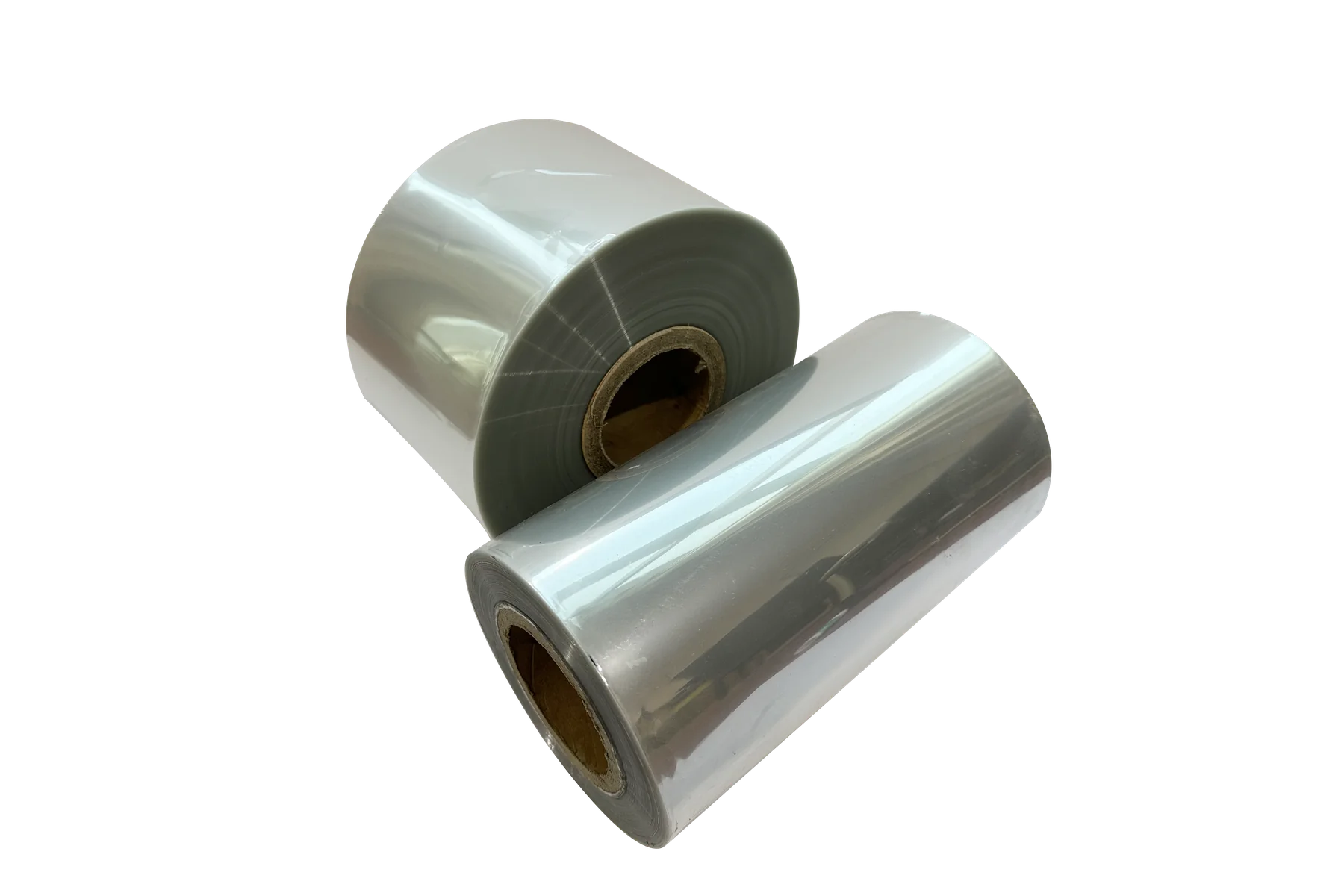
CPET shrink film is a heat-shrinkable plastic film made from Crystalline Polyethylene Terephthalate (CPET) with a melting point of 230°C.
Its key advantages include PET-bottle recycling compatibility, high TD shrinkage, and excellent transparency.
It can shrink up to 74% in the transverse direction at 95°C with a wide processing window.
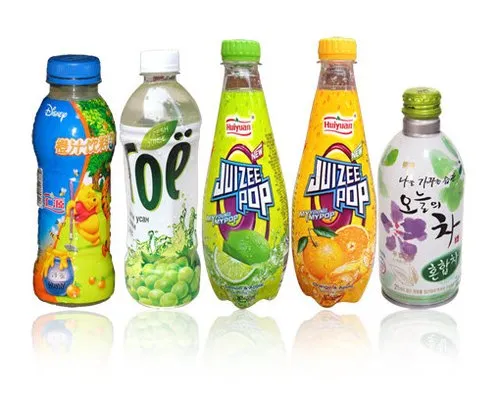
Common applications include tamper-evident neck bands, pharmaceutical sleeves, beverage bottle labels, and any product requiring full PET-stream recyclability.
Technical Specifications
| Property | Test Method | Unit | Result |
|---|---|---|---|
| Density | ASTM D 1505 | g/cm³ | 1.32 ± 0.02 |
| Tensile Strength @ MD | ASTM D 882 | MPa | ≥ 45 |
| Tensile Strength @ TD | ASTM D 882 | MPa | ≥ 180 |
| Elongation at Break @ MD | ASTM D 882 | % | ≥ 300 |
| Elongation at Break @ TD | ASTM D 882 | % | ≥ 30 |
| Heat Shrinkage @ MD | ASTM D 1204 95°C 10s | % | ≤ 5.0 |
| Heat Shrinkage @ TD | ASTM D 1204 95°C 10s | % | 74 ± 2 |
| Friction Coefficient @ Static | ASTM D 1894 | μs | ≤ 0.60 |
| Friction Coefficient @ Dynamic | ASTM D 1894 | μk | ≤ 0.55 |
| Haze | ASTM D 1003 | % | ≤ 7.0 |
| Transmittance | ASTM D 1746 | % | ≥ 90 |
| Gloss (45°) | ASTM D 2457 | % | ≥ 100 |
| Surface Tension | ASTM D 2578 | mN/m | ≥ 38 |
Product range: thickness 30-60 μm. Melting point: 230°C.
Shrinkage Curve (Temperature vs. Shrinkage %)
Curve represents our typical CPET Shrink Film behavior in a 10-second water bath (ASTM D 1204).
Actual shrinkage depends on film thickness, exposure time, and tunnel conditions — request a batch-specific test report for production planning.
CPET Shrink Film Applications
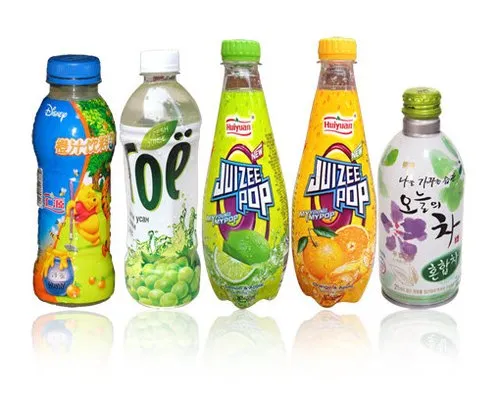
CPET shrink film is used across pharmaceutical, food and beverage, cosmetics and personal care, and household products industries. Typical applications include tamper-evident neck bands on supplement and medicine bottles, beverage bottle sleeves designed for PET-stream recycling, and any packaging where the label must be recyclable together with the PET container.
Mono-Material Shrink Film: One Polymer, One Recycling Stream
Our CPET shrink film is made of the same polymer family as the PET bottles it decorates — what the packaging industry calls a mono-material solution. Mono-material shrink film means the sleeve and the container share one resin family, so a labeled bottle stays in a single recycling stream instead of needing the label pulled off first. It is the core reason brand owners and sleeve converters specify mono-material film for design-for-recycling programs.
What that means at the sorting line depends on what the sleeve is made of relative to the bottle:
| Container | Sleeve film | Resin-stream match | Design-for-recycling result |
|---|---|---|---|
| PET (RIC 1) bottle | CPET sleeve (RIC 1) | Same PET family | Labeled bottle stays in the PET stream; no sleeve removal needed |
| PET (RIC 1) bottle | PVC (RIC 3) sleeve | Different resin | Recognized PET-stream contaminant; sleeve must be separated |
| PET (RIC 1) bottle | Paper / OPS sleeve | Different material | Requires separate sorting before PET recycling |
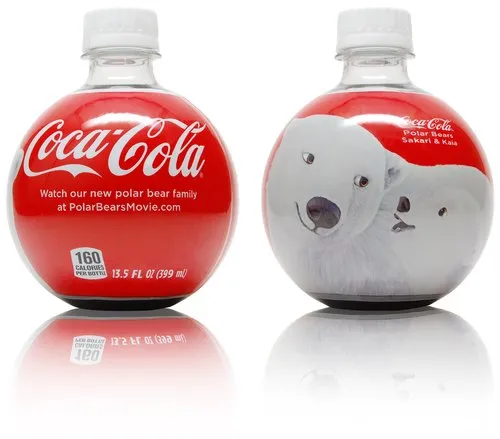
Because our CPET grade shares the bottle’s Resin Identification Code 1 and PET’s ~1.32 g/cm³ density band, it does not have to be pulled off before reprocessing. One film — CPET at TD 74 ± 2% shrinkage (ASTM D 1204, 95°C 10s) — covers full-body sleeves on contoured PET bottles while keeping the finished pack mono-material. Supplied as printable rolls, 30–60 μm, 200–2000 mm wide, MOQ 1–3 tons. See our GRS-certified recycled-content RPET film and contoured beverage bottle sleeves.
RIC 1 Recyclable Shrink Sleeve: Same Resin Code as the PET Bottle
Every roll of our CPET film carries Resin Identification Code 1 — the same resin code molded into PET bottles. That is what makes a CPET sleeve a RIC 1 recyclable shrink sleeve: a fully sleeved bottle can be baled, washed, and reprocessed in the standard PET stream with no separate de-sleeving step, supporting bottle-to-bottle circularity.
| Resin code | Resin | On a PET bottle, the sleeve… |
|---|---|---|
| RIC 1 (PET/PETE) | PET / CPET | Matches the bottle; stays in the PET recycling stream |
| RIC 3 (PVC) | Polyvinyl chloride | Recognized PET-stream contaminant; must be separated out |
| RIC 7 (Other) | Mixed / other polymers | Sorted out of the PET stream; generally not bottle-to-bottle |
Two properties let our film survive PET reprocessing intact: a 230°C melting point that withstands standard PET recycling temperatures, and TD 74 ± 2% shrinkage (ASTM D 1204, 95°C 10s) that seats a full-body sleeve on contoured PET bottles. The result is a decorated bottle whose label and container are recovered together as one RIC 1 material, rather than a mixed-resin pack that has to be optically sorted and discarded. See our recycled-content RPET shrink film and wash-off label film for glass bottles.
Why Choose JFPolyFilm
A premium shrink film supplier is judged on three things: production scale, batch consistency, and global trade reliability. Here's how we deliver on all three.
In-House Bruckner Production
Three state-of-the-art Bruckner production lines deliver 18,000+ tons annually, with consistent quality and the scale to fulfill large recurring orders without sub-contracting.
Quality Assured per Batch
Every production batch is tested for shrinkage rate, thickness uniformity, and optical properties before shipment. A Certificate of Analysis (COA) ships with each order, with full lot traceability.
Global Trade Experience
Exporting to 30+ countries across Americas, Europe, Southeast Asia and the Middle East. We handle international shipping, customs documentation, and Incoterms end-to-end.
Frequently Asked Questions
How does JFPolyFilm verify the quality of every batch?
How many splices are in a shrink film roll?
How does JFPolyFilm identify each roll and pallet?
What is the minimum order quantity (MOQ)?
How is the film packed and shipped internationally?
How should the film be stored?
What printing methods are compatible with the film?
Is the film corona-treated for printing?
Can I request product samples before placing an order?
Why is CPET recyclable with PET bottles?
What is the melting point of CPET shrink film?
What's the recommended shrink tunnel temperature?
Need a Quote for CPET Shrink Film?
Tell us your specifications and we'll respond within 24 hours.
Request a Quote